
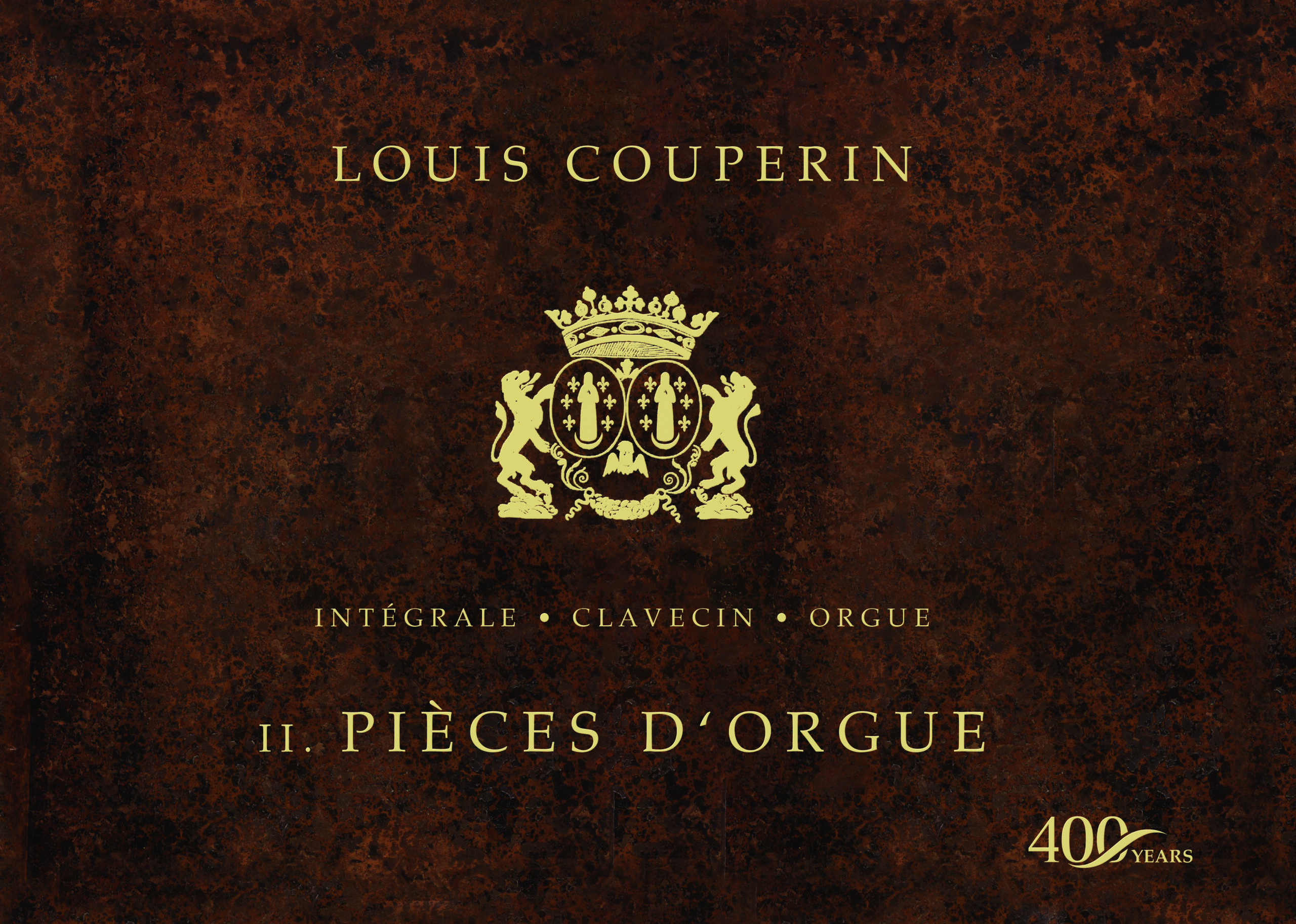
LBMP–077: Louis Couperin 400 – Pièces d’orgue

From €45.25
Major new edition of Louis Couperin’s surviving organ music, prepared from the Oldham manuscript and accompanied by an extensive bilingual study of the composer, his musical world and the transmission of the repertory.
ISBN: 978-1917401-46-3 (Collector’s Edition) | 978-1917401-45-6 (Hardback) | 978-1917401-47-0 (Wire)
Edited by David Ponsford and Jon Baxendale
- A handsome edition available in hardback and wire-bound volumes
- A new and authoritative edition of Louis Couperin’s organ music
- The only commercially available edition
- Includes chant for performance in liturgical settings
- Full preface and commentary in English and French
- Four available formats
- Collector’s Edition
- Colour hardback cover with a matt finish (choice on checkout)
- Wire-bound with soft colour cover (choice on checkout)
- Tablet (PDF – one download available for 5 days)
Prices vary according to your needs. Please first choose the format you require.
Please note that if you are an EU customer, the prices include the VAT for your area. This is collected for orders under €150. EU customers whose orders exceed €150 will see the VAT until checkout, at which point taxes will be removed.
 Published in 2026 to mark the four-hundredth anniversary of Louis Couperin’s birth, this major new edition of the composer’s surviving organ music presents the repertory prepared from the Oldham manuscript, the only known witness to Couperin’s organ music apart from two concordances preserved elsewhere. The Oldham source had remained largely unseen by scholars since its discovery in 1957. The edition has been prepared by Jon Baxendale and David Ponsford, whose work on seventeenth-century French keyboard music is widely recognised.
Accompanying the musical text is an extensive preface extending to more than fifty-eight pages in English, together with a French translation. Far more than a conventional editorial introduction, the study offers an immersive exploration of Couperin’s artistic world, the transmission of his music and the liturgical and musical environment in which the repertory emerged. Questions of source transmission, scribal hands, liturgical practice, registration, notation, rhetoric, tempo relationships, chant practice and ornamentation are examined in detail, with particular attention given to the relationship between the organ, chant and ceremonial practice at Saint-Gervais. Much of this material bears directly upon questions of performance practice, while the extensive section devoted to ornamentation will be of particular value to performers and scholars working within the French Classical organ and harpsichord repertory.
Particular attention is devoted to the Oldham manuscript itself and its relationship to the wider Couperin tradition, shedding new light on the circulation of the composer’s music and the complex processes through which the repertory survived. Detailed graphological analysis also addresses longstanding questions surrounding the source and decisively challenges earlier claims of autograph involvement, placing it more securely within the broader context of seventeenth-century scribal transmission. The edition also explores the organ culture of Saint-Gervais, the influence of plainchant, the stylus phantasticus and the rhetorical foundations of French organ writing in the decades before the high Classical tradition. Appropriate plainchant has also been included for those wishing to perform the hymns within a liturgical setting.
Prepared directly from the surviving source material, the musical text combines scholarly rigour with practical clarity for performers. Bringing together extensive historical commentary with a refined and authoritative edition of the music itself, the volume stands as both a major scholarly contribution and a practical performing edition for organists, researchers and libraries alike.
The edition is available in four formats: hardback, wirebound, electronic (PDF) and a Collector’s Edition featuring foiled lettering, a placemarker ribbon, head and tail bands, and marbled endpapers. A companion volume of the Pièces de clavecin, edited by Jon Baxendale, is also available, and both publications may be purchased together as a set.
Publié en 2026 à l’occasion du quatre-centième anniversaire de la naissance de Louis Couperin, cette nouvelle édition majeure de l’œuvre d’orgue survivante du compositeur présente le répertoire établi à partir du manuscrit Oldham, unique témoin connu de la musique d’orgue de Couperin en dehors de deux concordances conservées ailleurs. La source Oldham était demeurée largement inaccessible aux chercheurs depuis sa découverte en 1957. L’édition a été préparée par Jon Baxendale et David Ponsford, dont les travaux sur la musique française pour clavier du XVIIe siècle sont largement reconnus.
Le texte musical est accompagné d’une vaste préface dépassant cinquante-huit pages en anglais, ainsi que d’une traduction française. Bien plus qu’une simple introduction éditoriale, cette étude propose une exploration approfondie du monde artistique de Couperin, de la transmission de sa musique et de l’environnement liturgique et sonore dans lequel ce répertoire a vu le jour. Les questions de transmission des sources, de mains de copistes, de pratique liturgique, de registration, de notation, de rhétorique, de rapports de tempo, de plain-chant et d’ornementation y sont examinées en détail, avec une attention particulière portée aux relations entre l’orgue, le chant et les pratiques cérémonielles de Saint-Gervais. Une grande partie de cette réflexion touche directement aux questions de pratique d’exécution, tandis que l’importante section consacrée à l’ornementation sera d’un intérêt tout particulier pour les interprètes et chercheurs travaillant sur le répertoire classique français pour orgue et clavecin.
Une attention particulière est accordée au manuscrit Oldham lui-même et à sa relation avec la tradition plus large de Couperin, apportant un nouvel éclairage sur la circulation de la musique du compositeur et sur les processus complexes ayant permis la survie du répertoire. Une analyse graphologique détaillée revient également sur les questions anciennes entourant la source et remet résolument en cause les hypothèses antérieures d’intervention autographe, replaçant celle-ci dans le contexte plus large de la transmission manuscrite au XVIIe siècle. L’édition explore également la culture organistique de Saint-Gervais, l’influence du plain-chant, le stylus phantasticus et les fondements rhétoriques de l’écriture française pour orgue avant la grande tradition classique. Un plain-chant approprié a également été inclus pour les musiciens souhaitant exécuter les hymnes dans un contexte liturgique.
Préparé directement à partir des sources conservées, le texte musical allie rigueur scientifique et clarté pratique pour les interprètes. Réunissant un vaste commentaire historique et une édition musicale raffinée et faisant autorité, ce volume constitue à la fois une contribution scientifique majeure et une édition pratique destinée aux organistes, chercheurs et bibliothèques.
L’édition est disponible en quatre formats : relié, spirale, électronique (PDF) et édition Collector avec marquage à chaud, ruban signet, tranchefiles et gardes marbrées. Un volume complémentaire des Pièces de clavecin, édité par Jon Baxendale, est également disponible, et les deux publications peuvent être achetées ensemble sous forme de coffret.
Lyrebird music’s release of Louis Couperin’s Pièces de clavecin last year marks something of a milestone for this key 17th-century repertoire. This impressive publication, incorporating significant departures from earlier editions, offers something truly new to the field.
The two principal sources of Louis Couperin’s harpsichord music are the so-called Bauyn and Parville manuscripts. As detailed in the preface, it is difficult to assess which of these sources is more authoritative, given that both contain errors of repetition and omission. Bauyn has been chosen as the principal source here since, as the editor explains, watermark analysis proves it to be the earlier of the two.
In all of Lyrebird’s editions, there is a mission to present as many visual aspects of the source material as possible. Players will see a significant difference in the appearance and layout of the pieces compared with, for example, Alan Curtis’ edition for Le Pupitre, especially in terms of original beaming and ornamentation. This style of presentation allows readers to be influenced by subtleties such as hand shapes, articulation and gesture. The issue of ornamentation is challenging in these pieces, given that the Bauyn manuscript is nearly bereft of ornaments. None are added here by the editor, but those present in the Parville manuscript have been transferred where sensible. Players using this edition will be confident to add their own, using ideas for guidance in the preface.
Referencing the debates of the past decade, Baxendale’s introduction concisely counters Glen Wilson’s argument (in his Early Keyboard Journal article ‘The Other Mr Couperin’, 2013) that Charles (not Louis) Couperin might be composer of these pieces. Demuring, Baxendale refers to the ‘restricted’ and liturgical style of organ music of this period, believing that ‘organ music was restricted in style because it had to be functional” and that the ‘new, modish and experimental’ nature of the compositional language of the harpsichord goes some way to explain the difference in nature of Louis’ organ works. Fundamentally, he disagrees with Wilson’s argument that the Louis’ missing forename in either principal source points to a different authorship, Louis’ brother Charles (father of François le Grand).
The prefaces of Lyrebird’s edition have earned a strong reputation for their detailed insight into performance practice. Here, Baxendale discusses rhetoric with regards to Couperin’s harpsichord music in a far more detailed way than his forebears, and his comments on the rhetorical language of the preludes is a significant contribution to the pedagogical field on these works. His didactic writing here is inspired, and guides readers/players in areas from harmonic direction, use of tempo/movement, breathing/phrasing and inequality, to figures of speech and rhythmic devices, drawing on examples in a compelling way.
The notation of Couperin’s preludes is notoriously difficult to interpret. Baxendale’s section on these pieces features diagrams with coloured notes to indicate the main progressions. Relating this to the score, he suggests meanings for the curved and vertical lines, helping players interpret groupings appropriately. For Baxendale, it is the placing of the curved lines, not their meaning, which is sometimes ambiguous. He guides his reader into the intricacies of declamation, harmonic working, ornamental shapes and fingering.
This quality release sits well within the rapidly growing Lyrebird Music catalogue, which encompasses a range of keyboard repertoire, ranging from 16th-century collections to César Franck. The print quality is high, with a clear typeface and thoughtful pagination. This well-priced edition reflects a huge amount of original research, care and detailed preparation, with issues of performance practice at its core. I would recommend this publication highly to keyboard players who would like to get closer to the original notation of the sources. This edition, equally suitable for the seasoned player and less experienced, will satisfy every thinking musician.
Thomas Allery
Harpsichord & Fortepiano, Spring 2023
LBMP–077: Louis Couperin 400 – Pièces d’orgue
From €45.25
Major new edition of Louis Couperin’s surviving organ music, prepared from the Oldham manuscript and accompanied by an extensive bilingual study of the composer, his musical world and the transmission of the repertory.
ISBN: 978-1917401-46-3 (Collector’s Edition) | 978-1917401-45-6 (Hardback) | 978-1917401-47-0 (Wire)
Edited by David Ponsford and Jon Baxendale
- A handsome edition available in hardback and wire-bound volumes
- A new and authoritative edition of Louis Couperin’s organ music
- The only commercially available edition
- Includes chant for performance in liturgical settings
- Full preface and commentary in English and French
- Four available formats
- Collector’s Edition
- Colour hardback cover with a matt finish (choice on checkout)
- Wire-bound with soft colour cover (choice on checkout)
- Tablet (PDF – one download available for 5 days)
Prices vary according to your needs. Please first choose the format you require.
Please note that if you are an EU customer, the prices include the VAT for your area. This is collected for orders under €150. EU customers whose orders exceed €150 will see the VAT until checkout, at which point taxes will be removed.
Published in 2026 to mark the four-hundredth anniversary of Louis Couperin’s birth, this major new edition of the composer’s surviving organ music presents the repertory prepared from the Oldham manuscript, the only known witness to Couperin’s organ music apart from two concordances preserved elsewhere. The Oldham source had remained largely unseen by scholars since its discovery in 1957. The edition has been prepared by Jon Baxendale and David Ponsford, whose work on seventeenth-century French keyboard music is widely recognised.
Accompanying the musical text is an extensive preface extending to more than fifty-eight pages in English, together with a French translation. Far more than a conventional editorial introduction, the study offers an immersive exploration of Couperin’s artistic world, the transmission of his music and the liturgical and musical environment in which the repertory emerged. Questions of source transmission, scribal hands, liturgical practice, registration, notation, rhetoric, tempo relationships, chant practice and ornamentation are examined in detail, with particular attention given to the relationship between the organ, chant and ceremonial practice at Saint-Gervais. Much of this material bears directly upon questions of performance practice, while the extensive section devoted to ornamentation will be of particular value to performers and scholars working within the French Classical organ and harpsichord repertory.
Particular attention is devoted to the Oldham manuscript itself and its relationship to the wider Couperin tradition, shedding new light on the circulation of the composer’s music and the complex processes through which the repertory survived. Detailed graphological analysis also addresses longstanding questions surrounding the source and decisively challenges earlier claims of autograph involvement, placing it more securely within the broader context of seventeenth-century scribal transmission. The edition also explores the organ culture of Saint-Gervais, the influence of plainchant, the stylus phantasticus and the rhetorical foundations of French organ writing in the decades before the high Classical tradition. Appropriate plainchant has also been included for those wishing to perform the hymns within a liturgical setting.
Prepared directly from the surviving source material, the musical text combines scholarly rigour with practical clarity for performers. Bringing together extensive historical commentary with a refined and authoritative edition of the music itself, the volume stands as both a major scholarly contribution and a practical performing edition for organists, researchers and libraries alike.
The edition is available in four formats: hardback, wirebound, electronic (PDF) and a Collector’s Edition featuring foiled lettering, a placemarker ribbon, head and tail bands, and marbled endpapers. A companion volume of the Pièces de clavecin, edited by Jon Baxendale, is also available, and both publications may be purchased together as a set.
Publié en 2026 à l’occasion du quatre-centième anniversaire de la naissance de Louis Couperin, cette nouvelle édition majeure de l’œuvre d’orgue survivante du compositeur présente le répertoire établi à partir du manuscrit Oldham, unique témoin connu de la musique d’orgue de Couperin en dehors de deux concordances conservées ailleurs. La source Oldham était demeurée largement inaccessible aux chercheurs depuis sa découverte en 1957. L’édition a été préparée par Jon Baxendale et David Ponsford, dont les travaux sur la musique française pour clavier du XVIIe siècle sont largement reconnus.
Le texte musical est accompagné d’une vaste préface dépassant cinquante-huit pages en anglais, ainsi que d’une traduction française. Bien plus qu’une simple introduction éditoriale, cette étude propose une exploration approfondie du monde artistique de Couperin, de la transmission de sa musique et de l’environnement liturgique et sonore dans lequel ce répertoire a vu le jour. Les questions de transmission des sources, de mains de copistes, de pratique liturgique, de registration, de notation, de rhétorique, de rapports de tempo, de plain-chant et d’ornementation y sont examinées en détail, avec une attention particulière portée aux relations entre l’orgue, le chant et les pratiques cérémonielles de Saint-Gervais. Une grande partie de cette réflexion touche directement aux questions de pratique d’exécution, tandis que l’importante section consacrée à l’ornementation sera d’un intérêt tout particulier pour les interprètes et chercheurs travaillant sur le répertoire classique français pour orgue et clavecin.
Une attention particulière est accordée au manuscrit Oldham lui-même et à sa relation avec la tradition plus large de Couperin, apportant un nouvel éclairage sur la circulation de la musique du compositeur et sur les processus complexes ayant permis la survie du répertoire. Une analyse graphologique détaillée revient également sur les questions anciennes entourant la source et remet résolument en cause les hypothèses antérieures d’intervention autographe, replaçant celle-ci dans le contexte plus large de la transmission manuscrite au XVIIe siècle. L’édition explore également la culture organistique de Saint-Gervais, l’influence du plain-chant, le stylus phantasticus et les fondements rhétoriques de l’écriture française pour orgue avant la grande tradition classique. Un plain-chant approprié a également été inclus pour les musiciens souhaitant exécuter les hymnes dans un contexte liturgique.
Préparé directement à partir des sources conservées, le texte musical allie rigueur scientifique et clarté pratique pour les interprètes. Réunissant un vaste commentaire historique et une édition musicale raffinée et faisant autorité, ce volume constitue à la fois une contribution scientifique majeure et une édition pratique destinée aux organistes, chercheurs et bibliothèques.
L’édition est disponible en quatre formats : relié, spirale, électronique (PDF) et édition Collector avec marquage à chaud, ruban signet, tranchefiles et gardes marbrées. Un volume complémentaire des Pièces de clavecin, édité par Jon Baxendale, est également disponible, et les deux publications peuvent être achetées ensemble sous forme de coffret.
Lyrebird music’s release of Louis Couperin’s Pièces de clavecin last year marks something of a milestone for this key 17th-century repertoire. This impressive publication, incorporating significant departures from earlier editions, offers something truly new to the field.
The two principal sources of Louis Couperin’s harpsichord music are the so-called Bauyn and Parville manuscripts. As detailed in the preface, it is difficult to assess which of these sources is more authoritative, given that both contain errors of repetition and omission. Bauyn has been chosen as the principal source here since, as the editor explains, watermark analysis proves it to be the earlier of the two.
In all of Lyrebird’s editions, there is a mission to present as many visual aspects of the source material as possible. Players will see a significant difference in the appearance and layout of the pieces compared with, for example, Alan Curtis’ edition for Le Pupitre, especially in terms of original beaming and ornamentation. This style of presentation allows readers to be influenced by subtleties such as hand shapes, articulation and gesture. The issue of ornamentation is challenging in these pieces, given that the Bauyn manuscript is nearly bereft of ornaments. None are added here by the editor, but those present in the Parville manuscript have been transferred where sensible. Players using this edition will be confident to add their own, using ideas for guidance in the preface.
Referencing the debates of the past decade, Baxendale’s introduction concisely counters Glen Wilson’s argument (in his Early Keyboard Journal article ‘The Other Mr Couperin’, 2013) that Charles (not Louis) Couperin might be composer of these pieces. Demuring, Baxendale refers to the ‘restricted’ and liturgical style of organ music of this period, believing that ‘organ music was restricted in style because it had to be functional” and that the ‘new, modish and experimental’ nature of the compositional language of the harpsichord goes some way to explain the difference in nature of Louis’ organ works. Fundamentally, he disagrees with Wilson’s argument that the Louis’ missing forename in either principal source points to a different authorship, Louis’ brother Charles (father of François le Grand).
The prefaces of Lyrebird’s edition have earned a strong reputation for their detailed insight into performance practice. Here, Baxendale discusses rhetoric with regards to Couperin’s harpsichord music in a far more detailed way than his forebears, and his comments on the rhetorical language of the preludes is a significant contribution to the pedagogical field on these works. His didactic writing here is inspired, and guides readers/players in areas from harmonic direction, use of tempo/movement, breathing/phrasing and inequality, to figures of speech and rhythmic devices, drawing on examples in a compelling way.
The notation of Couperin’s preludes is notoriously difficult to interpret. Baxendale’s section on these pieces features diagrams with coloured notes to indicate the main progressions. Relating this to the score, he suggests meanings for the curved and vertical lines, helping players interpret groupings appropriately. For Baxendale, it is the placing of the curved lines, not their meaning, which is sometimes ambiguous. He guides his reader into the intricacies of declamation, harmonic working, ornamental shapes and fingering.
This quality release sits well within the rapidly growing Lyrebird Music catalogue, which encompasses a range of keyboard repertoire, ranging from 16th-century collections to César Franck. The print quality is high, with a clear typeface and thoughtful pagination. This well-priced edition reflects a huge amount of original research, care and detailed preparation, with issues of performance practice at its core. I would recommend this publication highly to keyboard players who would like to get closer to the original notation of the sources. This edition, equally suitable for the seasoned player and less experienced, will satisfy every thinking musician.
Thomas Allery
Harpsichord & Fortepiano, Spring 2023